
The Museum collects, preserves, and presents

The MET collects and preserves life documents and explores their meanings to present them through exhibitions, activities, various initiatives, and publications.
Research activity is the foundation that led to the creation of the MET and its heritage, and it continues to be the basis for its ongoing development. The goal is not only to address the scientific community but also to open up to a broad and diverse public.
Research begins with the objects and documents collected over the years to reconstruct the contexts and cultural levels of which these objects are a part, transforming them into storytelling themes.
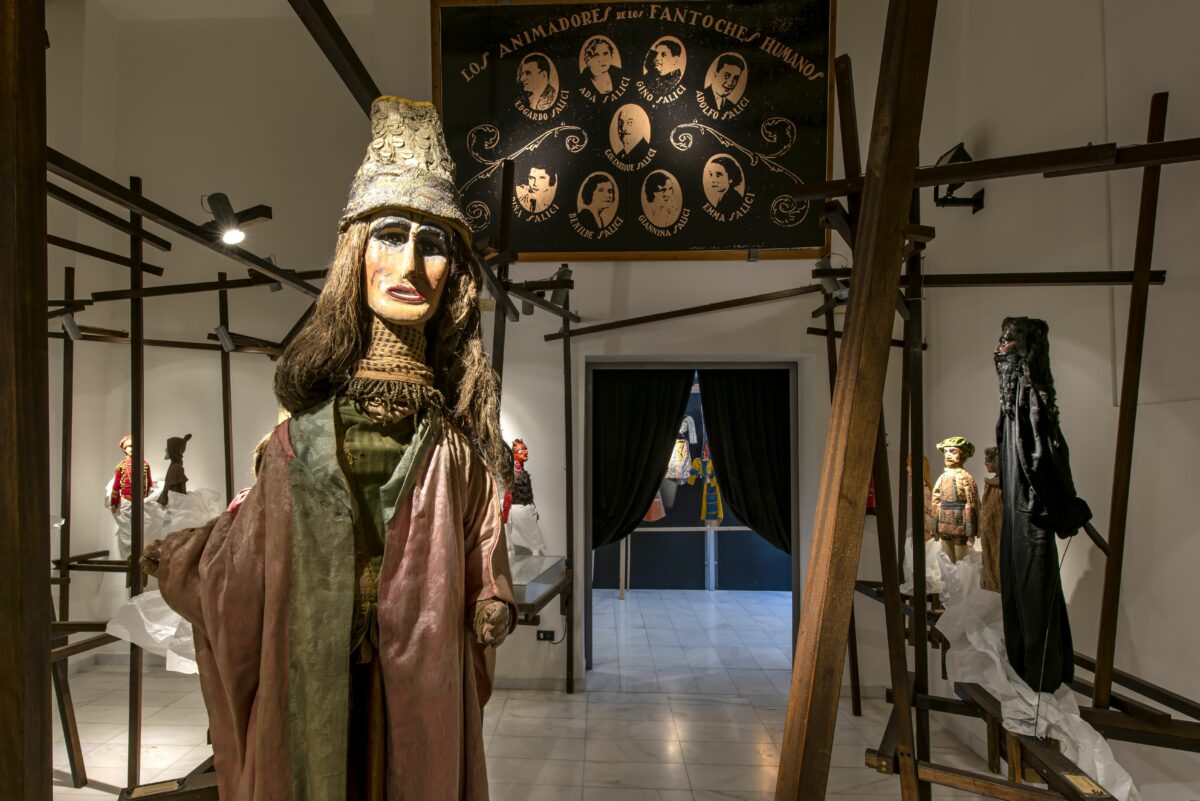
Burattini al MET
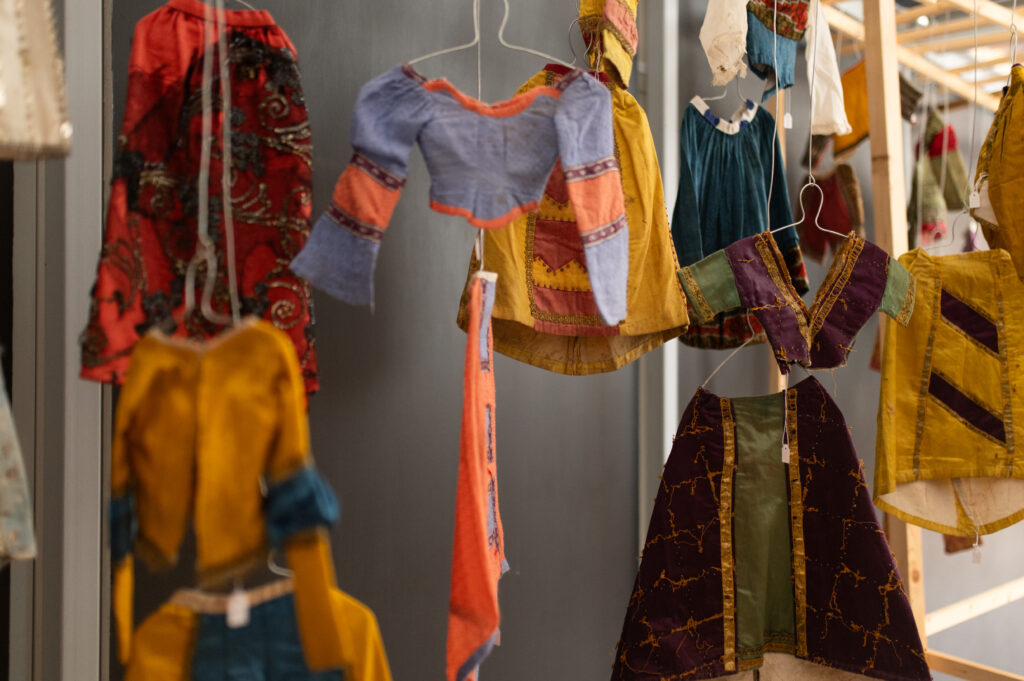
vestiti burattini

2023 – 2024 | Between the Threads of a Legacy
The puppet collection of the Salici-Stignani family is presented in a catalog.

This volume completes a “model” enhancement path dedicated to the puppet collection of the Salici-Stignani family, initiated by the then-director Mario Turci after the acquisition of the materials.
Inventorying, restoration, study, cataloging, development of educational projects, organization of theater festivals, and exhibitions have been the key steps in a process that marks the history of this collection since its “second life” in the MET’s heritage.
Between 2006 and 2012, interventions were carried out on nearly all objects in the collection, funded by the regional law L.18/2000. These interventions were crucial not only for the preservation of the materials but also for the understanding of each individual piece.

In 2014/2015, Claudia Gallo was entrusted with studying the history of the Salici-Stignani family-theater company for her thesis, which has since been updated for the publication of this volume.

Over the years, the MET has developed various initiatives around this heritage, aimed at a wide audience: educational activities for schools, workshops for children, and summer performances that have centered on figure theater as a still relevant genre.

Between 2020 and 2023, the puppets and marionettes returned to the stage, starring in exhibitions at various cultural institutions in Santarcangelo, curated by Claudio Ballestracci.

Thanks to the project “MET. Collezioni e tradizioni per tutti”, funded by the European Union – NextGenerationEU within the PNRR M1C3-3 INTERVENTION 1.2 – “Removal of physical and cognitive barriers in museums, libraries, and archives,” the museum has reorganized and improved the catalog of materials – figures, accessories, clothing – accompanied by a rich photographic archive.

The volume “reconnects” all parts of this valuable heritage, to return it to the community to which it belongs through an additional tool of knowledge.

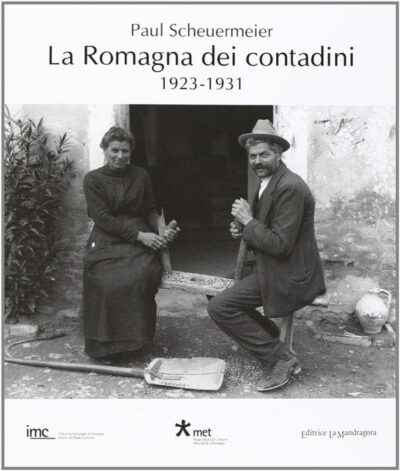
Copertina Scheuermeier

1995 | The Romagna of the Peasants

In October 1995, the Museum of the Customs and Traditions of the People of Romagna wrote to the Romanisches Seminar in Bern to inquire about the possibility of acquiring copies of the documents produced by Paul Scheuermeier (Swiss ethnographer and photographer) during his research in Romagna in the 1920s and 1930s.

Paul Scheuermeier arrived in Italy during the politically delicate period of Mussolini’s rise to power. Italy was going through a severe economic crisis, as were all the other European countries. Scheuermeier thus found himself in a “mixed” transitional situation, where he was able to capture both the old and the new of Italian agriculture.

In Romagna, Scheuermeier stayed in Saludecio, Sant’Agata Feltria, Fusignano, Ravenna, Cesenatico, Dozza Imolese, and Meldola, covering the entire Romagna region. He photographed peasants and agricultural tools and conducted interviews to collect names and dialectal terms.

The book “La Romagna dei Contadini” brings together all of the material from the Swiss researcher’s study (155 photographs, interviews) with texts by Laura Iuliano, Paolo Pracucci, and Davide Pioggia. It was published with the support of the Fondazione Cassa di Risparmio di Ravenna and the Pro Loco of Santarcangelo.