Conservation for Today and the Future
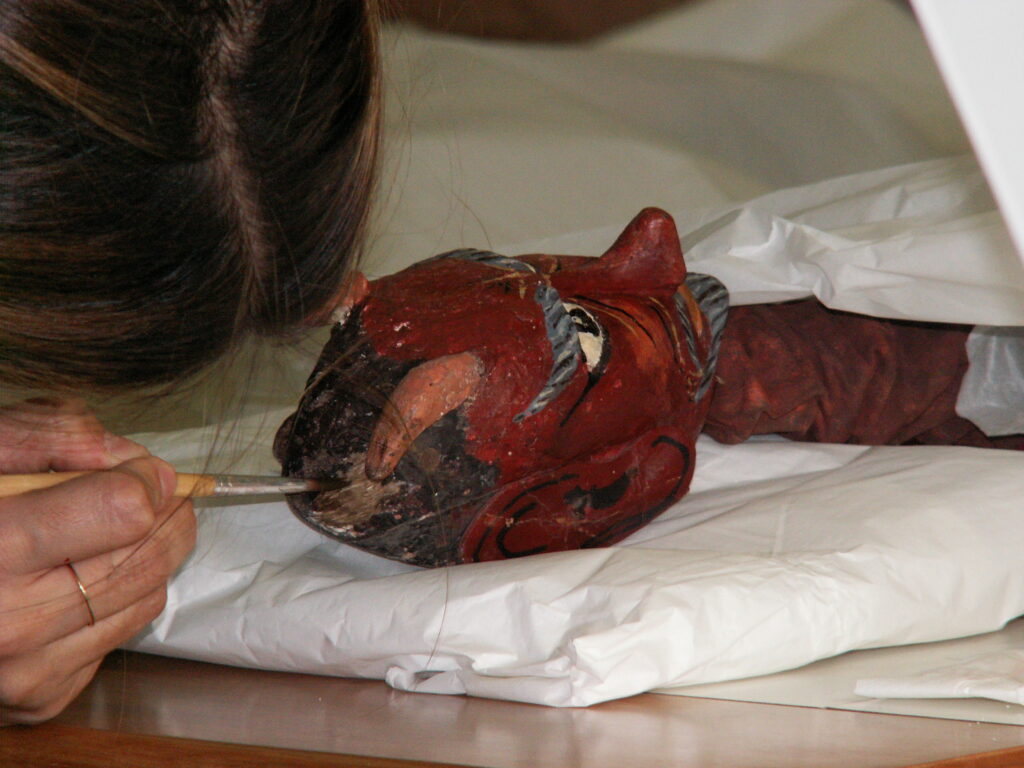
Restoration work is an expression of research and the need to preserve materials from the deterioration caused by time and other agents, maintaining their integrity and characteristics.
The restoration of artifacts and works of art is essential to understand their materials, techniques, and functional aspects. Additionally, it is an indispensable field to ensure that museums fulfill one of their primary functions: to hand down cultural heritage to future generations.
Numerous restoration interventions are made possible thanks to the support of the Emilia-Romagna Region, which provides expertise and resources under regional law L.R. 18/2000.
Insect Control Measures for Collections
Every ethnographic collection, composed of numerous objects made from wood and other organic materials (such as wicker, fabrics, paper, etc.), is subject to the problem of unwanted insect presence. These insects include woodworms, fabric moths, and the so-called “silverfish,” which infest paper materials and bindings.
Among the best practices employed by the MET is the fumigation of the environment where the materials are stored. This process is carried out annually, during the spring period, based on the biological cycle of the insects, to hinder their reproduction.
The intervention is carried out by servizimuseali.com, an expert company in the field.
Collection of Puppets by the Salici-Stignani Family:
The Restoration of the Costumes
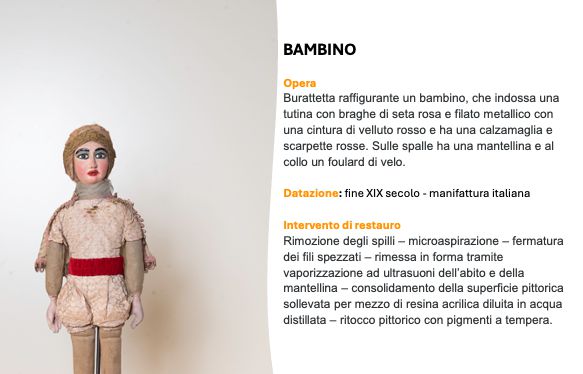
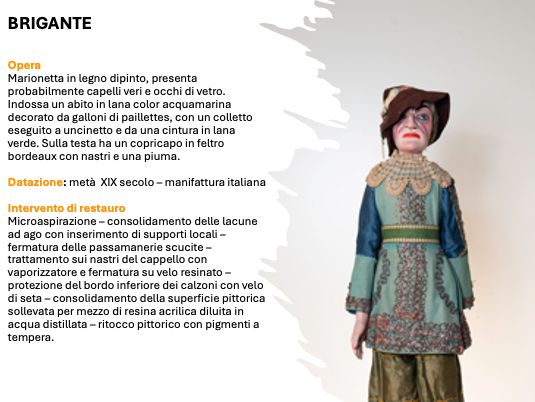
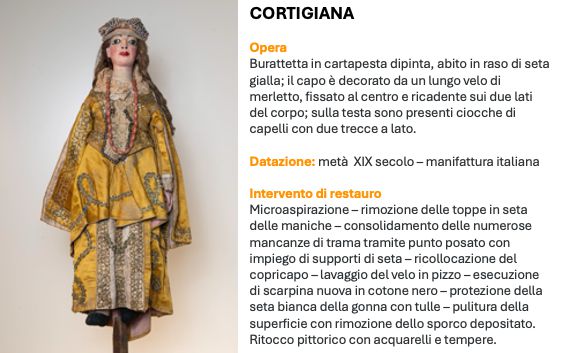
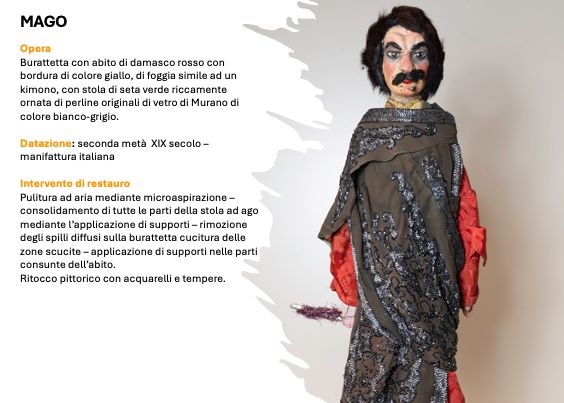
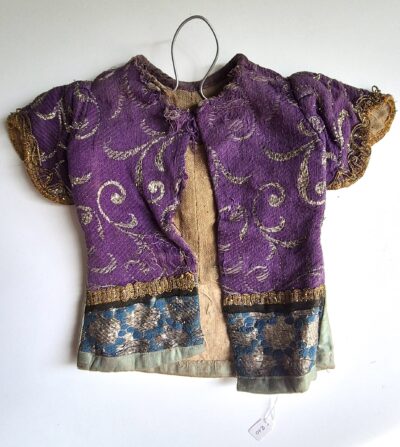
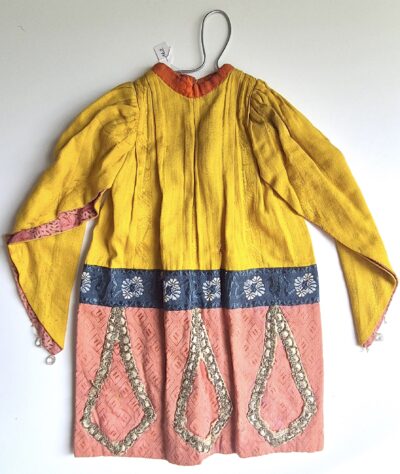
In 1990, the MET acquired a collection of puppets, puppet-marionettes, accessories, and costumes that belonged to the Salici-Stignani family. This collection has been revitalized thanks to restoration efforts. The costume collection includes 328 pieces, among which more than 60 complete outfits were made between the mid-19th century and the early 20th century. These costumes belong to the Salici-Stignani family.
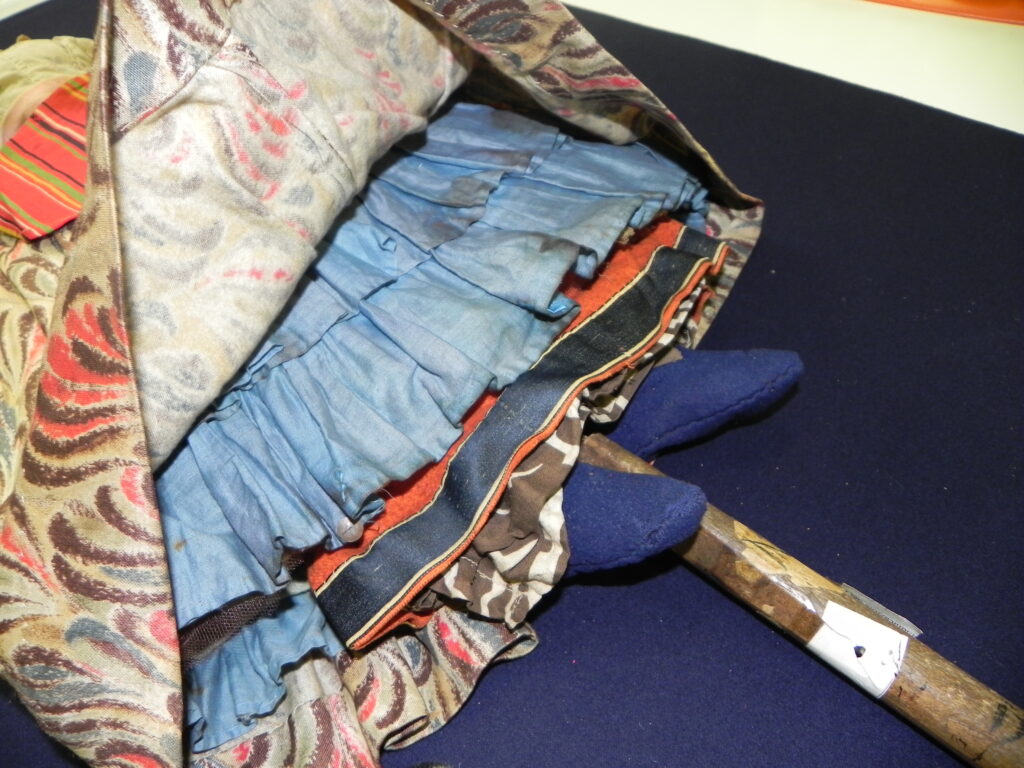
The costumes are made of fine fabrics (silk, satin, cotton, velvet, damask, silver and gold trimmings), some of which are new, and others are reused. They reflect great refinement and attention to detail, with features such as buttons, studs, and lace.
Collection of Puppets by the Salici-Stignani Family: The Restoration of Puppets and Puppet-Marionettes
In 1990, the MET acquired a collection of puppets, puppet-marionettes, accessories, and costumes that belonged to the Salici-Stignani family. This collection has been revived thanks to restoration efforts.
The figures from the world of animated theater come from the collection of Tinin Mantegazza and belonged to the Stignani and Salici families, one of the most famous puppeteer companies in Italy.
The materials include 52 puppets and puppet-marionettes, as well as cardboard backgrounds, accessories, and a collection of over 328 pieces of costumes.
The Istituto per i Beni Culturali della Regione Emilia-Romagna financed the restoration of 22 puppets from the collection under L.R. 18/2000.
The restoration was carried out by Tela di Penelope Restauro Laboratory, Museo del Tessuto in Prato.